Grandma HirokoJapanese Home Cooking
Launch promo ends in 00:00:00
Grandma Hiroko Sixty years at the stove

Japanese home cooking is not hard. Nobody ever taught you the order.

Rice, dashi, the knife, the heat — get those four right and every Japanese dish you have ever wanted to make becomes simple, cheap, and repeatable. This is the whole method, written down at last: ninety lessons, the way my grandmother taught me.

Instant download · Yours forever
90Lessons
7Parts
148Pages
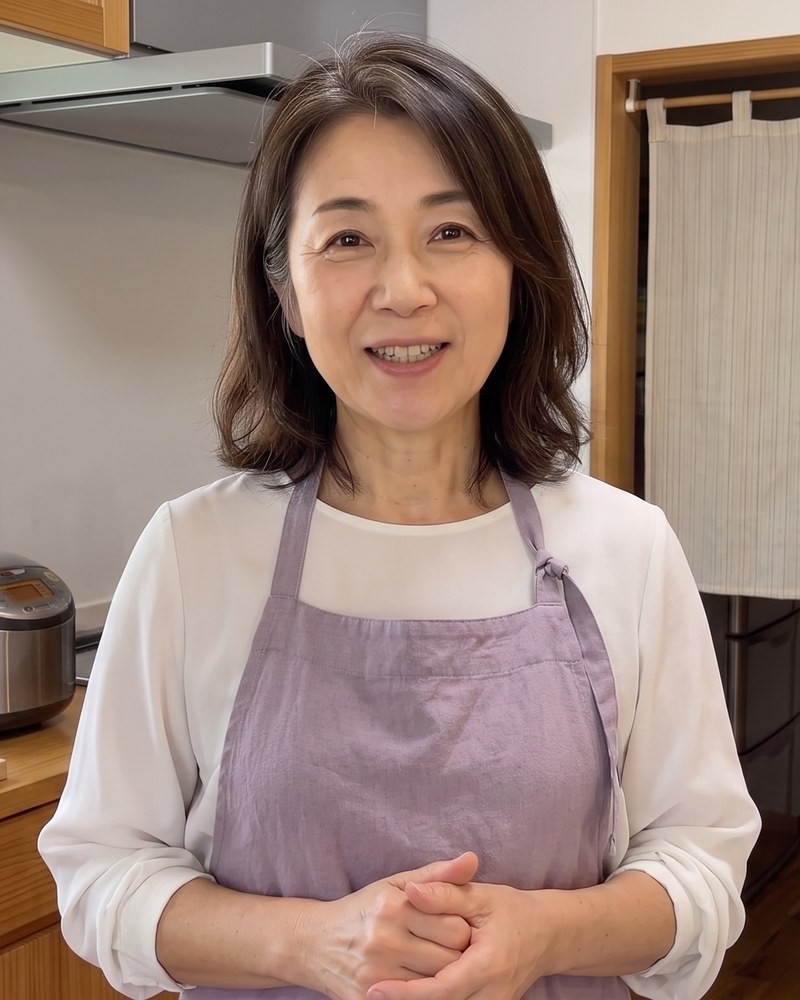
Grandma Hiroko in her kitchen

“Once you understand the why, you will not need my recipes anymore.”

Grandma Hiroko
I · The Book

Everything I learned in sixty years, finally written down.

I have stood at a stove for sixty years. I learned from my grandmother and my mother, standing on a stool beside them in a small kitchen that always smelled of dashi and rice. My grandchildren asked me to write everything down before I forget it. This book is my answer to them — and to you.

People think Japanese cooking is difficult. They picture restaurant sushi chefs, rare ingredients, and knives that cost more than a car. That is not the cooking I know. The cooking I know is home cooking: a pot of rice, a bowl of miso soup, a piece of grilled fish, some simmered vegetables, and a small dish of pickles. It is simple, cheap, and healthy, and it tastes of care.

“Everything in these pages rests on a few foundations: good rice, good dashi, even cutting, and the right heat. I have tried to explain not only what to do, but why.”

I have also tried to be honest. Every chapter closes with a short section called The Limits — where a technique stops working, where you need to be careful, and where my way is only one way among many. A good teacher tells you what she does not know.

Cook slowly at first. Burn some rice. Tear some omelets. Then one evening you will set four little dishes on the table, your family will go quiet as they eat, and you will understand why I kept at it for sixty years.

II · The Difference

Why recipes fail you, and why a method does not.

A recipe gets you one dinner. The order of work gets you every dinner after that.

× Cooking from scattered recipes

  • A different video for every dish, and nothing carries over to the next one
  • Rice comes out gluey one night, hard the next, and you never learn which step did it
  • Dashi from a packet because the real thing seems like a project
  • A shopping list of ten Japanese bottles you use once and leave in the cupboard
  • Dishes that taste flat and you cannot say why
  • Three hours for a meal that a Japanese mother puts out in forty minutes

Cooking the way a Japanese home does

  • One shape for the whole table — ichiju sansai, one soup and three sides — that you plan a week around
  • Water ratios and a resting rule that make rice come out the same every single time
  • Real dashi in twenty minutes from three ingredients, then used twice
  • A pantry core of six bottles that makes a thousand dishes
  • Sa-shi-su-se-so: the order seasonings go in, which is the reason your food tasted flat
  • Two sides made Sunday, so weeknights are just the main and the soup
III · What's Inside

Seven parts. Ninety lessons. In the order you actually learn them.

Parts One to Three give you the kitchen, the rice, and the dashi that every later dish depends on. After that, move around as you like.

Part One 13 lessons

The Japanese Kitchen

One soup, three sides. Five colors, five methods, five tastes. The tools that earn their space, the six pantry bottles, and how to cook Japanese from a regular grocery store.

Part Two 13 lessons

Rice

Reading the labels, washing, the soak most people skip, water ratios that never fail, pot and cooker, resting and fluffing — then sushi rice, onigiri, takikomi gohan, okayu and sekihan.

Part Three 13 lessons

Broth and Seasoning

Awase, kombu, shiitake and niboshi dashi — plus the second dashi that uses everything twice. Sa-shi-su-se-so, the master ratios, tare glazes, miso soup step by step, and umami stacking.

Part Four 13 lessons

Knife Work and Prep

Why Japanese cooks don't rock the blade. The guiding hand, the essential cuts, rolling cut, katsuramuki, whetstone sharpening, board care — and buying, filleting and judging fish.

Part Five 13 lessons

Everyday Home Dishes

Grilled salted fish, real teriyaki, nimono and the drop lid, nikujaga, tamagoyaki, karaage, tempura, tonkatsu, curry, donburi, udon and soba, gyoza, and sushi at home.

Part Six 13 lessons

Sides, Pickles, and Bento

Ohitashi, goma-ae, sunomono, kinpira gobo, tofu, chawanmushi. Quick pickles and the nuka bed, umeboshi and ginger, packing a bento, and turning scraps into furikake.

Part Seven 12 lessons

Seasons, Gatherings, and Wisdom

Shun — cooking by season — through spring shoots, summer noodles, autumn mushrooms and winter hot pot. New Year foods, okonomiyaki, ramen at home, sweets, tea, and Grandma's rules of the kitchen.

Every chapter The same four parts

How a lesson is built

The lesson — what the technique is and why it works. The method — clear steps in the order you do them. Grandma's Trick — one tip from my own kitchen. The Limits — where it stops working.
And at the back of the book

  • A substitution chart for when your shop has no mirin
  • The master ratio card — rice, dashi, and every sauce on one page
  • Four weekly meal plans, built on ichiju sansai
  • A pantry shopping list to take to the market
  • A full glossary of every Japanese word used
  • Measurements in both Celsius and Fahrenheit
Get the Japanese Kitchen Bible — $47 $27
Instant download · Yours forever
IV · Reader Results

What early readers wrote to me.

★★★★★

“I have cooked rice for thirty years and never once soaked it. Chapter 16 alone changed the texture completely. My husband asked if I had bought a new cooker.”

Margaret L. · Oregon
★★★★★

“The sa-shi-su-se-so chapter explained why my simmered dishes always tasted flat. I had been adding the soy sauce first for years. Such a small thing.”

David R. · Manchester, UK
★★★★★

“What I love is The Limits at the end of each chapter. She tells you when not to bother. No other cookbook I own is that honest with me.”

Anne-Marie T. · Ontario
Grandma Hiroko
V · About

I am Hiroko. I have cooked the same way for sixty years.

I learned to cook standing on a stool in my grandmother's kitchen, where the smell of dashi and rice never quite left the walls. I cooked for my husband, for three children, and now for grandchildren who film me at the stove and tell me people want to watch.

I am not a chef. I have never worked in a restaurant. What I have is a home cook's sixty years — the small corrections you only learn by making the same dish a thousand times, and the tricks my mother passed to me that were never written in any book.

On the channel I cook one dish at a time. In this book I have set the whole thing in order, from the pantry to the seasons, so that you can learn it the way I did: foundations first, then everything else becomes easy.

HirokoGrandma Hiroko · Japan
VI · The Book

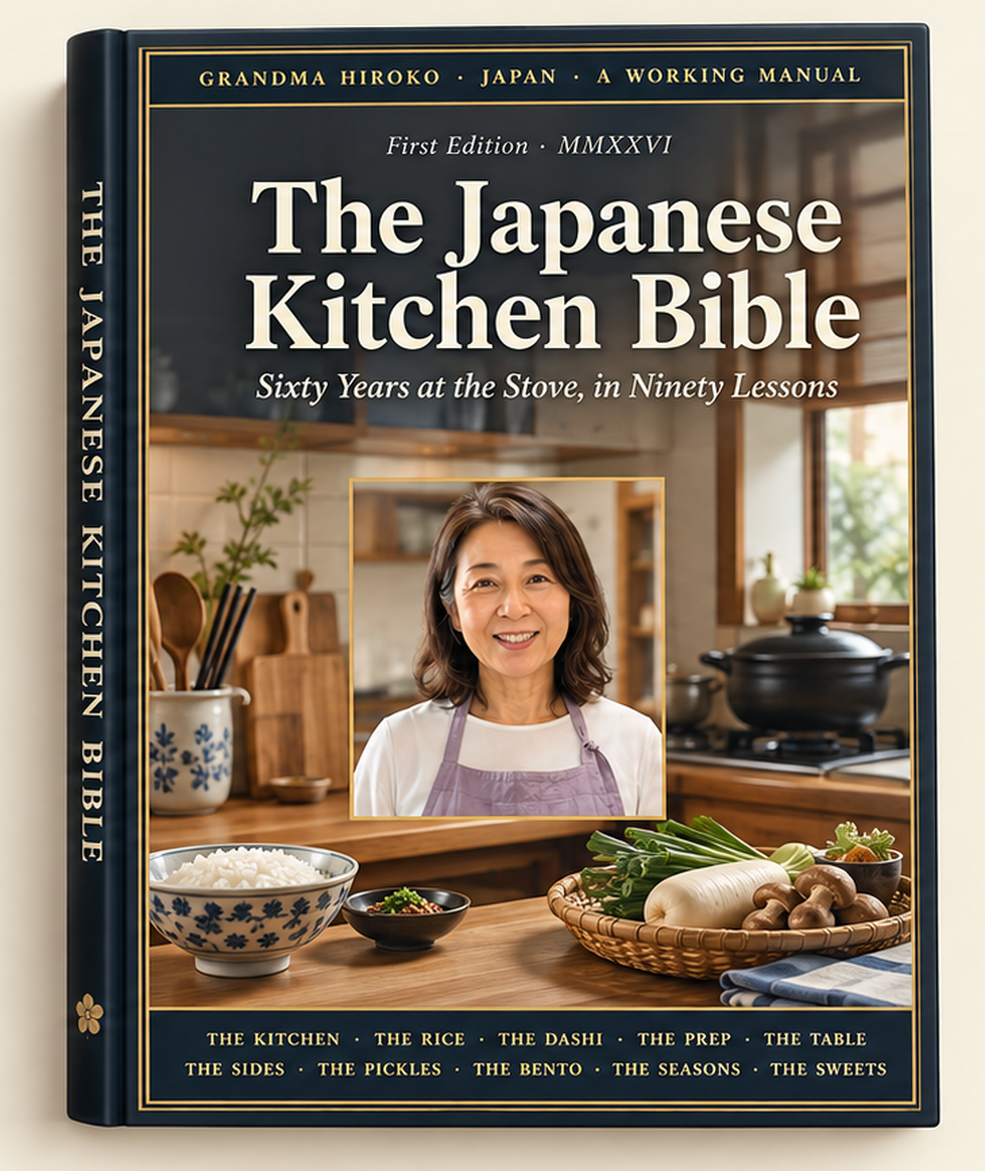
The Japanese Kitchen Bible

Sixty years at the stove, in ninety lessons.

First Edition · Illustrated · Instant Download
The Japanese Kitchen Bible by Grandma Hiroko

The Japanese Kitchen Bible

Everything Grandma Hiroko learned in 60 years at the stove — from rice, broth and knife work to the grandmother tricks behind every dish.

  • The complete 148-page illustrated book (PDF)
  • 90 lessons across 7 parts — kitchen, rice, dashi, knife work, dishes, sides, seasons
  • A Grandma's Trick and The Limits in every single chapter
  • The master ratio card — rice, dashi and every sauce on one page
  • Four weekly meal plans plus a pantry shopping list
  • A substitution chart for cooking from a regular grocery store
  • A full glossary of every Japanese term used
  • Reads on phone, tablet, computer — or print it for the kitchen
$47 $27 Launch promo
Get the Japanese Kitchen Bible — $47 $27
Instant download · Yours forever
VisaMastercardAmexPayPalApple Pay Secure checkout via Gumroad
VII · Questions

Before you order.

Is this real Japanese home cooking, or a Western version of it?

It is the cooking of one Japanese home — mine, and my mother's and grandmother's before me. It is not restaurant cooking and it does not pretend to speak for every region of Japan; a cook in Osaka would season some of these dishes differently, and I say so where it matters. Every chapter ends with The Limits, which is where I tell you plainly what my way does not cover.

Your videos are free. Why would I buy the book?

The videos are one dish at a time, in whatever order I happen to film them. The book is the whole method in order — the kitchen, then the rice, then the dashi, then the knife, and only then the dishes. It also holds the parts that do not film well: the water ratios, the master ratio card, the substitution chart, the meal plans, and the glossary. Keep watching the videos either way. They stay free.

Do I need special ingredients or an Asian market?

No. Chapter 10 is called Cooking Japanese From a Regular Grocery Store, and the substitution chart at the back covers what to do when your shop has no mirin or no kombu. Chapter 11 tells you what to grab first if you do find an Asian market, in priority order — but nothing in Parts One to Three requires one.

Why only $27 for a 148-page book?

Because it is a file, not a paper book. There is no printing, no shipping, and no shop taking its half. $27 is the launch price while the first edition is new; $47 is what it goes back to. I would rather it sat in a thousand kitchens than on a shelf in ten.

What format is it, and how do I get it?

A PDF, delivered the moment you order. Open it on a phone, a tablet, or a computer, or print the pages you want and keep them near the stove — that is what I do. It is yours to keep, and downloads again any time from your Gumroad library.

I am a complete beginner. Is this too advanced?

It is written for a beginner and starts further back than most books — how to wash rice, how to hold the knife, what each bottle in the pantry is for. If you have cooked Japanese food for years, start at Part Three; the dashi and seasoning chapters are where experienced cooks tell me they learn the most.

Grandma Hiroko
Wait — one thing

Less than one bowl of ramen.

Sixty years at my stove, ninety lessons, in one book. The launch price ends tonight — after that it goes back to $47.

Get the Japanese Kitchen Bible — $47 $27
Instant download · Yours forever
or see what's inside →